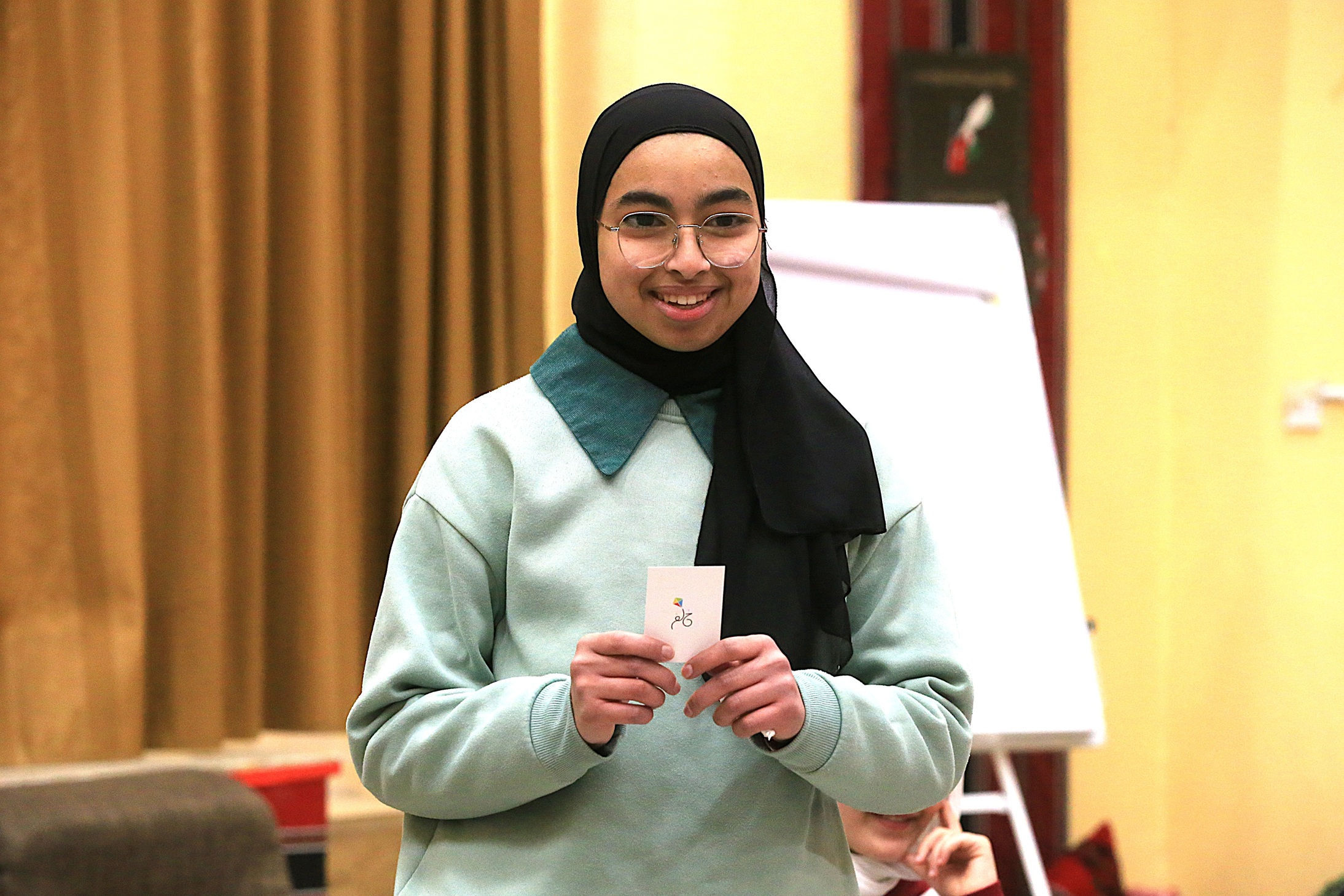
In classrooms across Jordan, many students grow up learning more about society’s expectations than possibilities. Gender norms, social pressure, and limited exposure to diverse careers often shape how young people imagine their futures, sometimes before they have the chance to discover their own interests or abilities. For Madrasati, a national initiative working to improve public schools, this quiet narrowing of ambition was a challenge that could not be ignored.
With support from IGNITE, Madrasati set out to address social norms through a board game. “Holm, meaning dream in Arabic, was designed to create something many classrooms lack, a structured space for students to explore who they are, what they want, and why it matters”, explains Mouna Abu Hamour, the Projects Supervisor.
Nurturing Confidence
Through storytelling, reflection, and guided discussion, students are encouraged to question assumptions and share aspirations in a safe and supportive environment. For many, it is the first time they are required to do so. As one student reflected, “The game made me think about my future in a way I never had before.”
Across 1,692 students who participated, the responses were often deeply personal. In classrooms where silence often surrounds conversations about the future, students began speaking, sometimes tentatively at first, then with growing confidence.
“I usually never speak about my dreams because I’m afraid of what people will say. But in this game, I felt like it was my responsibility to say what I want and defend it”, confesses one participant.
Teachers observed quieter students stepping forward, discussions becoming more respectful and reflective, and classmates encouraging one another rather than dismissing ideas.
Building a Dream-Friendly Environment
Through awareness sessions reaching more than 200 parents and educators, Madrasati brought families into the conversation, recognizing that expectations at home often shape what children feel is possible.
In these sessions, perspectives began to shift. “I used to think I was protecting my son’s future by rejecting his choice, but I realized that my real role is to listen to him and help him succeed in what he loves,” said one father.
Stories like this highlight the broader ambition behind Holm: to create ecosystems, classrooms, families, and communities, where young people are supported to pursue their aspirations.
This change is already visible: students are more engaged in discussions, more willing to express their views, and more likely to take on leadership roles. “We recorded a significant increase in critical thinking engagement, a meaningful shift in a space where boys are often expected to assert rather than reflect”, emphasizes Mouna Abu Hamour.
More Long-term Impact to Come
By challenging stereotypes early and creating space for exploration, Holm is helping to reshape how a generation approaches education, work, and identity. It encourages girls to pursue careers traditionally seen as out of reach, and boys to think beyond rigid expectations of success and masculinity. This matters not only for individual futures, but for society as a whole.
Madrasati’s work also takes on added importance in the context of Jordan’s evolving humanitarian landscape. With large populations displaced by the current crisis integrated into public schools, classrooms bring together students from diverse nationalities and backgrounds, often shaped by displacement and uncertainty. Through its strong focus on social and emotional learning, Madrasati supports social cohesion, reduces tensions, and creates inclusive spaces where all students feel safe, heard, and valued.
With IGNITE’s support enabling the development and scale of innovative approaches like Holm, Madrasati is demonstrating how simple tools can unlock profound change.
Because sometimes, the first step toward changing a future is simply allowing that future to be imagined.
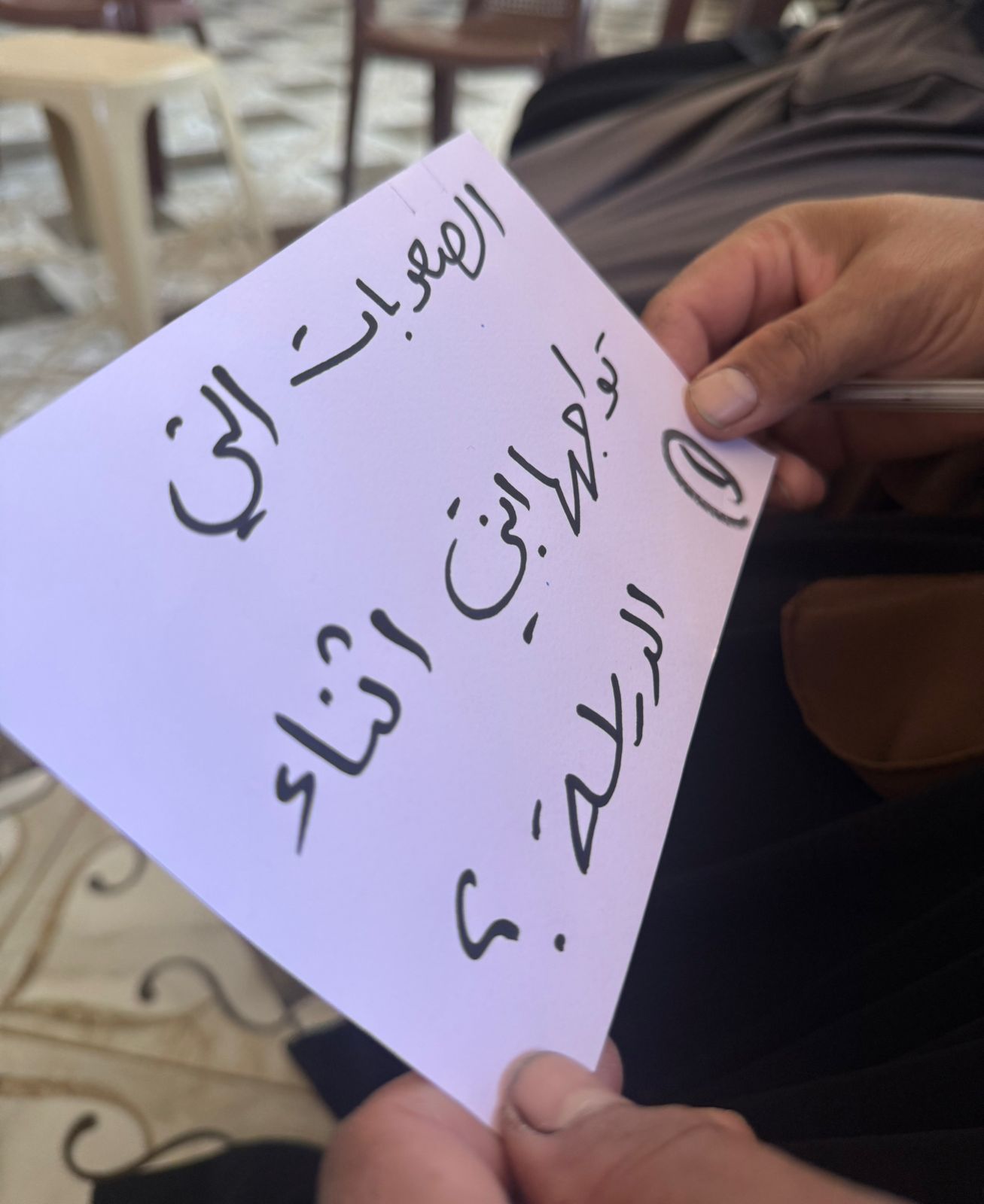
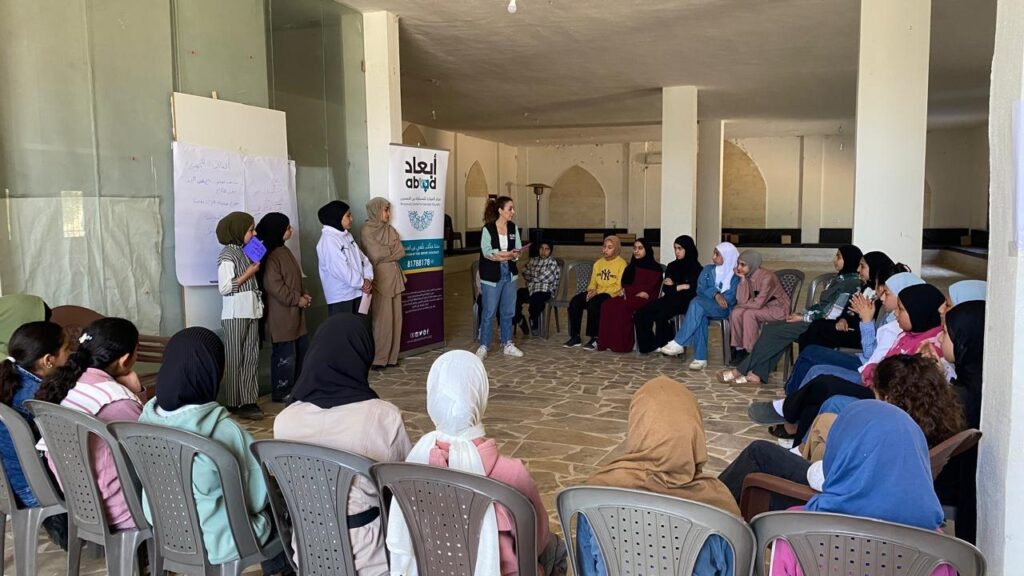
The most powerful transformation emerged in individual stories. One mother from Wadi Khaled initially believed early marriage was the only protection for her fifteen-year-old daughter against poverty and social pressure. Thanks to ABAAD’s sessions on adolescent development and gender equality, her perspective shifted entirely. She realized that marriage would not protect her daughter: it would disarm her of her future. Education became, in her words, “a lifelong weapon for independence.” She shifted her relationship with her daughter based on trust rather than control, and when costs threatened her daughter’s education, she organized a community carpooling group to ensure she could continue attending school.
This transformation is now being captured in the “Together for My Right to Education” toolkit (link in Arabic), designed to inspire lasting change across the region. The initiative is now moving into an intergenerational phase where educational tutors lead co-learning activities bringing adolescent girls and caregivers together, combining practical study techniques with coaching on creating motivating home learning environments.
Protecting Women in Humanitarian Crisis
As Lebanon faces renewed conflict in 2026, adding internally displaced to the protracted humanitarian situation, ABAAD has been at the forefront of the humanitarian response. The organization recognized immediately that displacement, overcrowding, and fractured support networks do not affect everyone equally. Women and girls bear disproportionate burdens, including heightened exposure to sexual violence, loss of reproductive health services, and isolation from traditional support systems.
ABAAD’s rapid adaptation drew on existing grassroots networks across Lebanon, allowing immediate deployment of frontline teams inside and outside collective shelters. The organization’s 24/7 GBV Safe Shelter continues operating as a critical protection mechanism, providing emergency temporary safe sheltering for high-risk survivors. Beyond the shelter, frontline teams deliver psychological first aid, community-based psychosocial support, individualized case management, and referrals to complementary services.
Recognizing the urgency and scale of need in Lebanon, ABAAD and other Lebanese grantees have received in May a fast-track top-up IGNITE funding to expand their humanitarian response, ensuring that protection systems hold even as the broader context fractures.