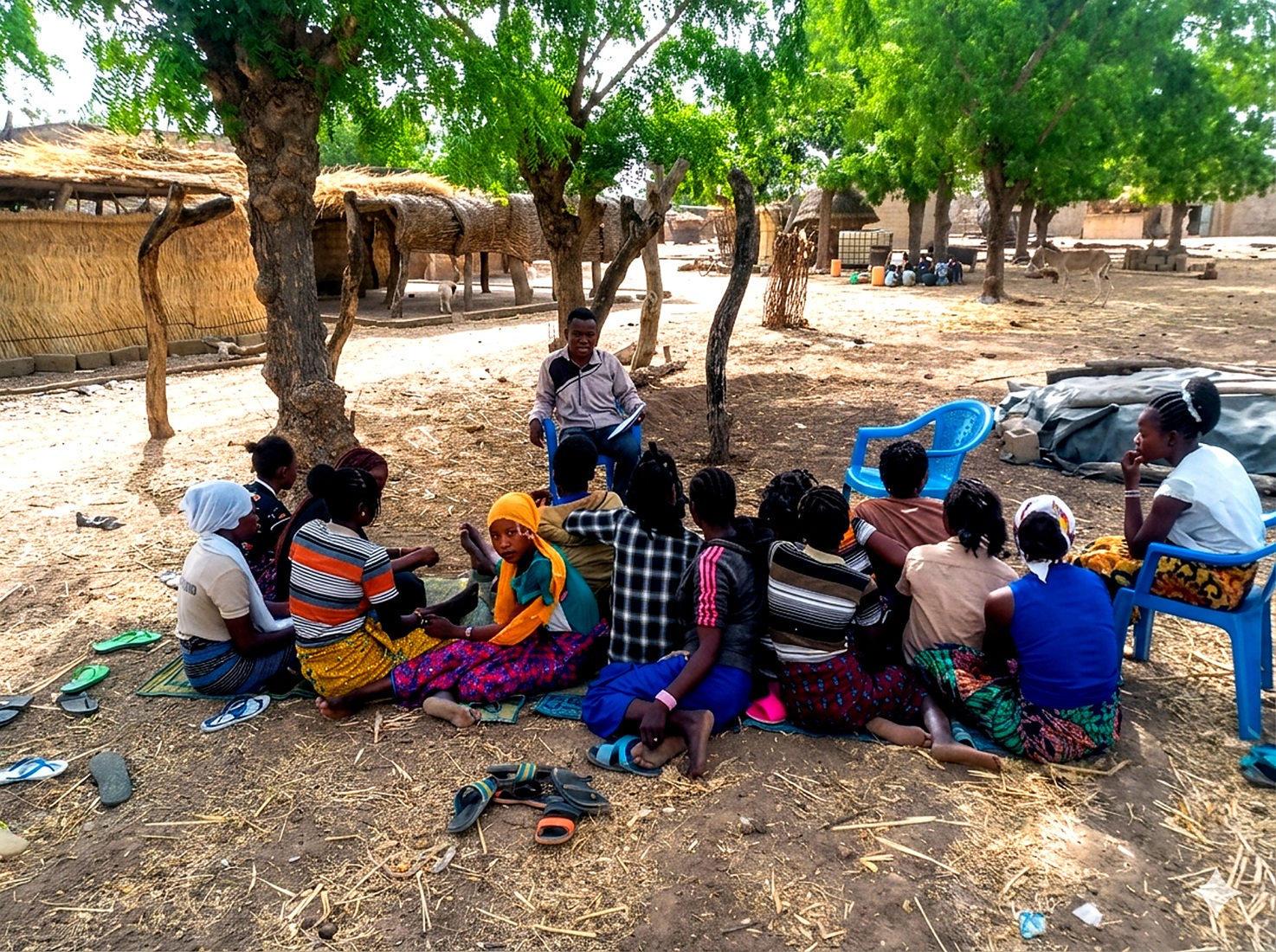
In Burkina Faso’s Nakambé region, 150 km from the capital Ouagadougou, girls dropping out of school had long been present. Communities, educators, and organizations suspected that gender-based violence (GBV) played a significant role, but without solid evidence, these concerns rarely translated into decisive policy action.
With support from the IGNITE programme, FEMIN-IN, a grassroots organization working at the intersection of gender equality and civic engagement, decided to produce rigorous, credible data that could explain the situation and allow civil society to push for systemic change. When the findings emerged, they revealed a stark reality: nearly 78% of schoolgirls reported experiencing some form of gender-based violence. For the team, the figure was more than a statistic, it was a moment of reckoning.
“We felt both outrage and shock,” reflects Annick Laurence Koussoube, FEMIN-IN’s chairwoman. “As field actors, we cannot remain indifferent. So much work on GBV awareness and prevention has been done, yet the numbers remain this high. It forces us to question whether our strategies are really working.”
Make school safer for girls and adolescents
The research, conducted across 11 localities in partnership with the Université Joseph Ki-Zerbo, did more than confirm assumptions. It exposed the scale and complexity of the issue and the urgency to act differently. Testimonies collected during the process painted a troubling picture. Violence was not limited to isolated incidents it was embedded in everyday school realities.
“Some boys admitted drugging girls to abuse them, without understanding the gravity of their actions. Others wait outside schools to threaten or attack them,” Ms. Koussoube recalls about the interviews’ verbatims.
Recognizing that community-level interventions alone were not enough, the findings prompted a shift in focus. While grassroots engagement remains essential, FEMIN-IN began to increasingly emphasize interventions within schools themselves to target younger girls, teachers, and school staff.
Advocate for a Large Coalition against GBV in Schools
The real breakthrough came during the official restitution workshop with 30 stakeholders including regional education authorities, child rights NGOs, university researchers, and enumerators. “The results created real surprise”, the activist notes. The workshop resulted in a set of practical recommendations to strengthen the response to gender-based violence in schools. These included integrating GBV prevention into teacher training, establishing school-based awareness groups, developing digital tools for sensitization, creating safe reporting mechanisms for students, and strengthening connections between schools, families, and social services. FEMIN-IN also worked alongside civil society organizations, education actors, and partners to co-develop a practical action plan. This included strengthening school-based prevention efforts,
The impact quickly extended beyond the project itself. Thanks to the organisation’s advocacy efforts, ministries have asked for the report to analyse it and to adjust their own action plans. “We want to continue this coordination to make our future interventions more effective”, Ms. Koussoube insists.
With IGNITE’s support enabling both high-quality research and sustained engagement with decision-makers, FEMIN-IN succeeded in something that is often difficult: bridging the gap between community evidence and institutional response. The data is now part of national conversations. It is being used to inform policies, guide programming, and strengthen advocacy efforts.
A Long Road Ahead
Yet, as significant as these immediate outcomes are, the long-term implications may be even greater. By documenting the scale of GBV with scientific rigor, FEMIN-IN has changed the terms of the debate. Gender-based violence in schools is no longer an issue that can be minimized or overlooked: it is measurable, visible, and harder to dismiss. This creates accountability. It also raises critical questions about the future.
“Burkina Faso speaks about a ‘progressive revolution’,” she adds. “But that cannot happen if half the population is not educated.” The work ahead is clear: strengthen prevention systems in schools, ensure safe reporting mechanisms, engage families, and maintain pressure for institutional reform.