In Lebanon’s Bekaa Valley, where rolling agricultural fields shape both livelihoods and traditions, adolescent girls often grow up with limited choices. Economic hardship, under-resourced public schools, and deeply rooted social norms expectations mean that education can feel distant, even unattainable. For many girls in the Zahle District, futures are narrowly defined long before they have the chance to imagine otherwise.
In 2025, the Tech Change Makers program was launched by the Michel Daher Society Foundation (MDSF) with IGNITE funding and close accompaniment from IRC and RMF to challenge this reality. Targeting adolescent girls in rural and vulnerable communities, the initiative combined English learning, digital skills, and leadership training into a single, holistic pathway, opening doors that had previously been out of reach.
For many participants, it marked a series of “firsts”: the first time writing an email, the first time coding a simple program, the first-time speaking English in front of a group. Each milestone, however small it seemed, carried profound meaning.
“Before this program, I had never taken technology classes and only had very basic English at school. I didn’t know how to use a laptop, and I wasn’t confident speaking in front of others,” remembers Manessa, 13, one of the participants.
Breaking Barriers to Learning
In Zahle’s public schools, the challenges are structural. Teacher shortages are common, educational resources are scarce, and English and technology classes are often absent altogether. Cultural norms frequently prioritize boys’ education, reinforcing the idea that girls’ aspirations should remain modest and domestic. As a result, girls are left without the skills increasingly required for higher education, employment, and civic participation.
The Tech Change Makers program responded directly to these gaps. Through a Training of -Trainer model, 20 young educators were equipped to teach English, coding, Arduino[1] technology, and mobile app development. This investment ensured not only an immediate impact, but also sustainability—building local capacity that will extend beyond the project’s duration.
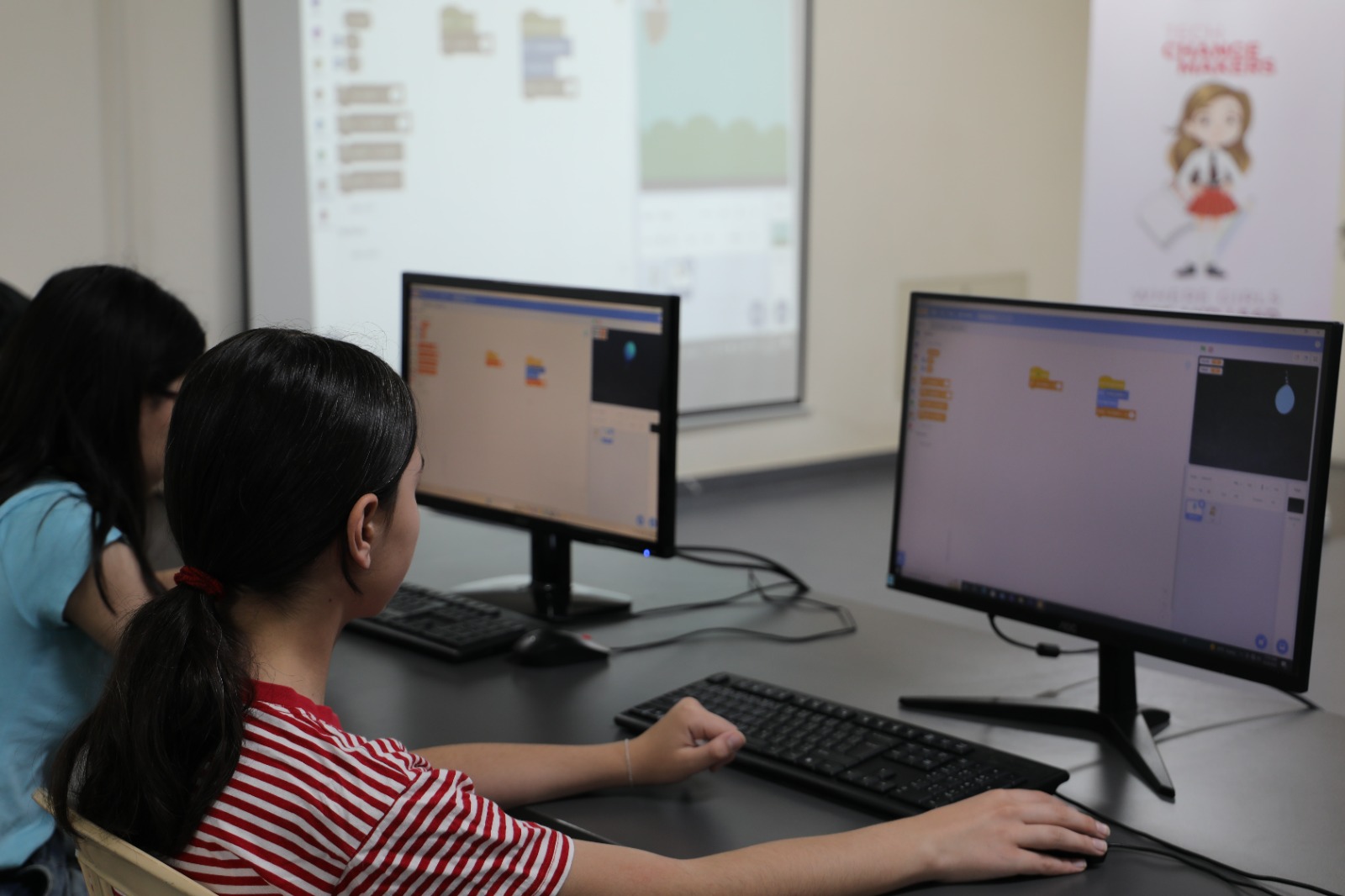
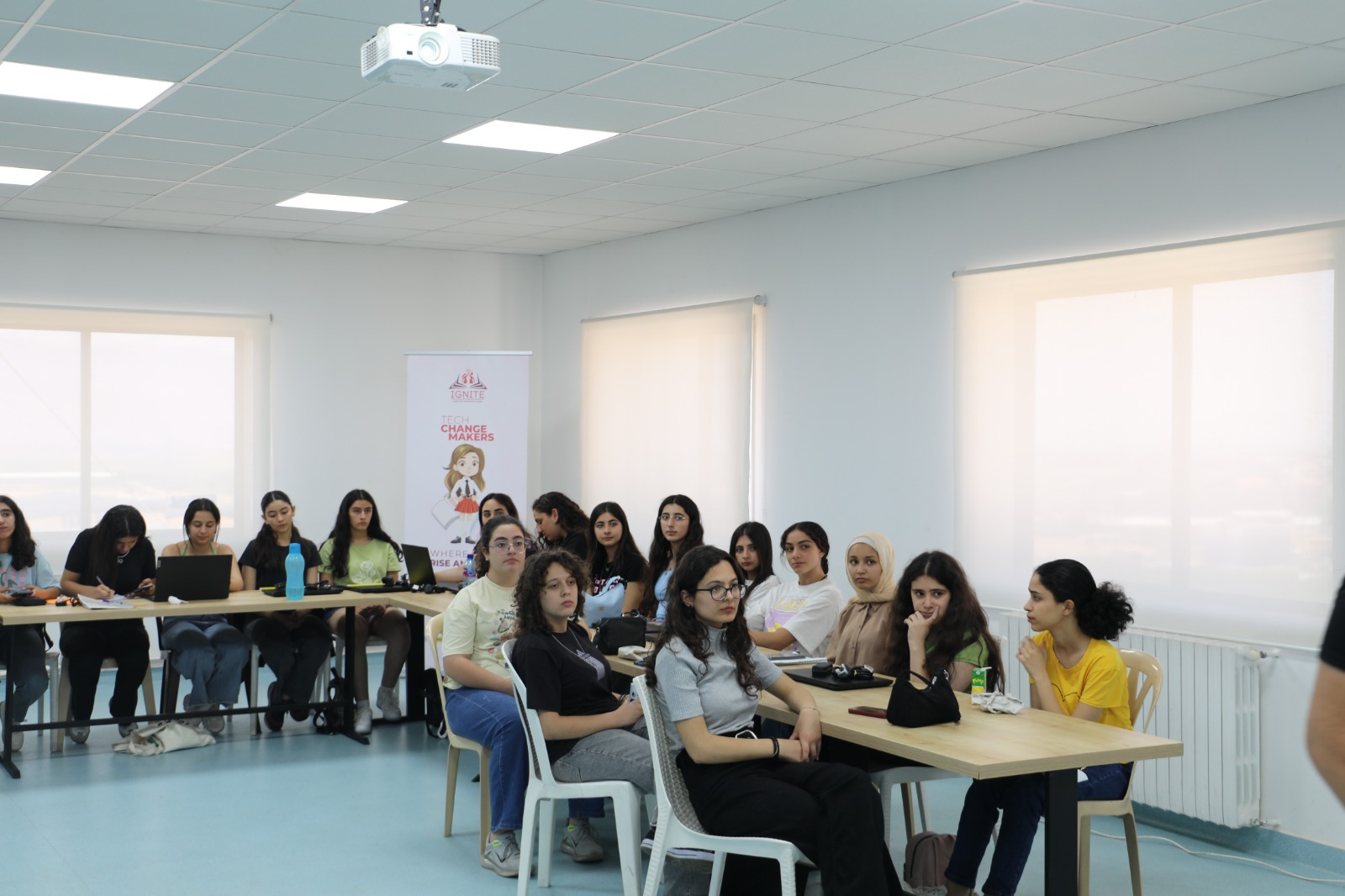
Over the course of the program, 180 girls from 12 to 19 years old received 125 hours of English instruction and 100 hours of technology training. Some had never had the opportunity to use a computer before. Today, they are coding with Scratch, experimenting with Arduino components, and developing simple mobile applications. Just as importantly, they are discovering that these skills are not out of reach and neither are the futures they unlock.
Confidence, Voice, and Leadership
“Most of the girls had no prior exposure to technology—some didn’t even know how to turn on a laptop. What impressed us most was how quickly they gained skills and how many now want to continue in tech-related fields,” explains Razan, the Project Manager.
Community-based awareness initiatives and school competitions encouraged girls to apply what they learned to real-world challenges, including solutions linked to the Sustainable Development Goals. These activities helped shift perceptions—not only among participants, but also within their schools and communities—about what girls can achieve when given the opportunity.
The journey was not without obstacles. Many students began with very limited English skills, making it difficult to grasp technical concepts. Teachers responded with creativity and patience: simplifying instructions, introducing vocabulary gradually, using visual aids, demonstrations, and hands-on practice. Step by step, girls gained confidence in their ability to learn independently and think critically.
While technical skills were a core focus, the program’s impact went far beyond the classroom. “One student’s behaviour made us realize that technical skills alone are not enough. She was observed bullying other students based on religion and appearance, affecting the confidence and participation of other girls. That moment pushed us to be more attentive to the learning environment and to strengthen the psychosocial dimension of the program,” remembers Razan.
Individual sessions focused on understanding the reasons and consequences of her conduct, fostering empathy, and reinforcing the principles of respect and collaboration.
This personalized support achieved a profound shift in the student behaviour. “She became attentive, participative, and goal-oriented, focusing on learning rather than conflict. Overall, the classroom environment became safer and more supportive”.
Adapting to Challenges, Building Futures, Shaping Communities
By the end of the program, the transformation was clear. Girls had strengthened their English and digital literacy, developed leadership and advocacy skills, and begun to envision futures that include university studies, technology careers, and active roles in their communities. Perhaps most importantly, they began to see themselves differently: not as observers of their lives, but as capable changemakers.
Aligned with IGNITE’s goals, Tech Change Makers demonstrates how access to education, digital skills, and gender equality training can empower adolescent girls, protect their rights, and expand their economic and civic opportunities.